Blog
Understanding Forged Alloy Steel: The Backbone of Industry
Long before engineers had simulation software and tensile test reports, they had instinct.
They heated metal, bent it, stressed it, broke it – and learned.
Every failure became a lesson. Every success became a standard.
Today, we do the same thing – just with better tools.
And at the heart of it all is a deceptively simple question:
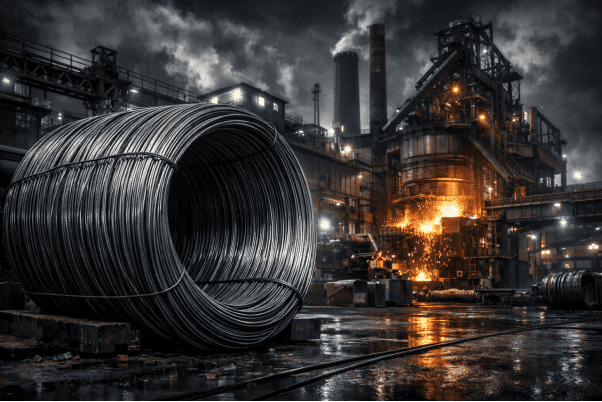
Which wire rod grade is right for the job?
Because in steel, grade is destiny.
Why Grade Selection is Not a Detail – It’s a Decision
We often see wire rods treated like commodities. Same coil, different supplier, same job – right?
Not quite.
The grade of a wire rod determines:
- How it bends
- How it stretches
- How it fatigues
- How it welds
- How it machines
- How long it survives
Pick wrong, and you don’t just lose performance – you lose predictability.
At Prime Steels, we design wire rods not just for compliance, but for behaviour.
What Exactly is a Wire Rod Grade?
A grade is not a label – it’s a recipe.
It defines:
- Chemical composition
- Microstructure
- Mechanical properties
- Heat treatment response
- Surface behaviour
And all of this determines what that wire rod will become.
To understand this fully, we recommend exploring our metallurgical breakdown here:
Grades & Chemical Composition
The Major Wire Rod Grade Families
1. Low Carbon Grades – Built to Bend, Not Break
Low-carbon wire rods are the diplomats of the steel world. They’re flexible, forgiving and easy to work with.
Typical traits:
- Excellent ductility
- Superior drawability
- Easy welding
- Low yield strength
Used for:
- Nails
- Mesh
- Binding wire
- Light fasteners
- General fabrication
These grades don’t resist – they adapt.
2. Medium Carbon Grades – The Balanced Performers
Medium carbon grades are where flexibility meets strength.
They offer:
- Higher tensile strength
- Improved wear resistance
- Controlled ductility
Perfect for:
- Automotive components
- Springs
- Mechanical fasteners
- Shafts
This is the grade family engineers reach for when compromise is not an option.
3. High Carbon Grades – Where Strength Dominates
High carbon wire rods are unapologetically strong.
They provide:
- High hardness
- Excellent fatigue resistance
- Exceptional wear performance
Used in:
- Suspension springs
- Piano wires
- Cutting wires
- Bearing cages
These grades are not flexible but they are relentless.
4. Cold Heading Quality (CHQ) Grades – Precision in Motion
CHQ grades are not made to be admired.
They are made to be transformed.
Designed for:
- Bolt forming
- Nut shaping
- Rivets
- Screws
They must flow under pressure without cracking.
CHQ grades are metallurgically tuned for:
- Consistent grain flow
- Controlled inclusion shape
- Superior formability
5. Special Purpose Grades – Engineered for Extremes
These include:
- Free cutting grades
- Spring steel grades
- Bearing grades
- Corrosion-resistant grades
Each exists because a standard grade couldn’t survive a specific job.
Want to dive into one of these in detail?
Free Cutting Steel Wire Rods: Engineered for Precision & Performance
How Engineers Actually Choose the Right Grade
Not by instinct. By asking better questions.
1. What stress will the component face?
Tensile, torsional, compressive, cyclic?
2. Will it be drawn, bent, forged or machined?
Processing behaviour matters as much as final strength.
3. What environment will it live in?
Humidity, corrosion, heat, vibration – all matter.
4. How long must it last?
Fatigue life often matters more than ultimate strength.
The Hidden Cost of Wrong Grade Selection
When a grade is wrong, you don’t see it immediately.
You see it later:
- In premature failures
- In tool wear
- In surface cracking
- In inconsistent performance
- In warranty claims
Steel remembers how it was made.
And it will behave accordingly.
Standards, Certifications & Why They Matter
Wire rod grades aren’t arbitrary.
They are governed by:
- IS
- ASTM
- EN
- JIS
Each standard defines chemical ranges, mechanical limits, and testing protocols.
At Prime Steels, we don’t just meet standards – we design within them.
The Future of Wire Rod Grades
The next generation of wire rods will be:
- Lighter
- Stronger
- More fatigue-resistant
- More recyclable
- More predictable
Driven by:
- EV platforms
- Smart infrastructure
- Green manufacturing
- Automation
Grades will no longer just meet needs – they will anticipate them.
Where Prime Steels Fits In
We don’t just manufacture wire rods.
We engineer their behaviour.
Our metallurgical approach combines:
- Precision chemistry
- Controlled rolling
- Consistent microstructure
- Application-specific design
To see how our wire rods are produced:
Process Flow Chart
To explore our product range:
Wire Rods
And if you’d like to know the philosophy behind it all:
About Us
Final Thought
Steel doesn’t fail randomly.
It fails according to its design.
And the grade is that design.
Choose wisely.
Engineer intentionally.
Because in wire rods, precision is not optional – it’s foundational.